
Learning money saving habits at a young age can help your kids develop healthy ways to manage money and build a strong mindset when it comes to money, allowing this simple step to serve them in the long run as well. When children understand the value of money in their childhood, they tend to become more responsible and confident when it comes to finances. Saving money doesn’t have to be boring or difficult for kids, it can be through practical and fun ways that make it easy for them to save, making the whole progress feel less of a task and more of something they can learn from. This article will help you explore some fun money saving methods for kids, allowing them to take control of their finances and learn a healthy money habit that will serve them in the years to come.
Use a Piggy Bank

For one of the most easy and effective ways to save money for kids, consider using a piggy bank. Encourage your children to put coins and notes into the piggy bank, allowing them to experience the satisfying feeling of ownership.
What’s even better than a piggy bank is a clear piggy bank which allows your children to see their progress, motivating them to save more instead of spending quickly. A clear piggy bank can serve as a visual reminder of their consistency and effort, allowing them to add to their savings instead of giving up midway the challenge. This saving method can also teach them patience, as your children learn to wait and collect money until they reach their goal.
Set a Savings Goal
Setting a savings goal gives a clear purpose and meaning to your kid’s savings journey, which is exactly why it is important to have a savings goal. Whether it’s a toy, a new book, or something as simple as an outing, having a savings goal can make your kids more motivated to achieve the target and stick to the savings journey.
Having a specific goal can help your kids realize that saving money is not only about keeping money, it can also be about planning for something meaningful. This healthy habit can also teach your children how to work steadily towards something and how consistent efforts can lead to meaningful results over time.
Save Part of Allowance
Another considerable option for children to save money is to save a small portion of their allowance regularly. You can encourage them to set aside a portion of their allowance with consistency and see the money adding up over time.
This simple yet thoughtful habit can allow your kids to learn responsibility and money management, allowing them to prioritize mindful saving over the temporary satisfaction of spending. This step may seem simple but it perfectly teaches your kids the power of consistency, allowing them to stay mindful of their financial habits in the future as well.
Earn Money Through Chores
You can also encourage your kids to earn money through simple chores and allow them to understand the value of hard work. Whether it’s cleaning their room, watering plants, or helping with groceries, allow your kids to earn money through these simple tasks and help them learn that money is not just provided, it has to be earned.
This simple habit can help them develop and understand the strong connection between hard work and reward, helping them build confidence and independence as well.
Separate Saving and Spending Money
Another important lesson when it comes to helping your kids understand finances and save money effectively is to help them differentiate between saving money and spending money. This step can allow them to stay organized and divide their money into two categories.
This simple money saving method helps kids learn balance, allowing them to spend guilt-free while still saving for their future. This money saving method also saves you from emotional spending, confusion, and careless spending, making it a considerable option for kids looking to save money.
Avoid Impulse Buying
Kids often feel excited when they see toys, snacks, or games, and this excitement can make them want to buy things immediately without thinking, which is why learning to avoid impulse buying is an important money habit to develop early. Parents can gently guide children to pause before spending and ask themselves whether the item is something they truly need or just something they want for a short moment.
Teaching kids to wait for a day or two before buying something helps them understand that not every desire needs to be acted on instantly. With time, children realize that many wants fade away, while their saved money stays and grows.
Track Savings Visually
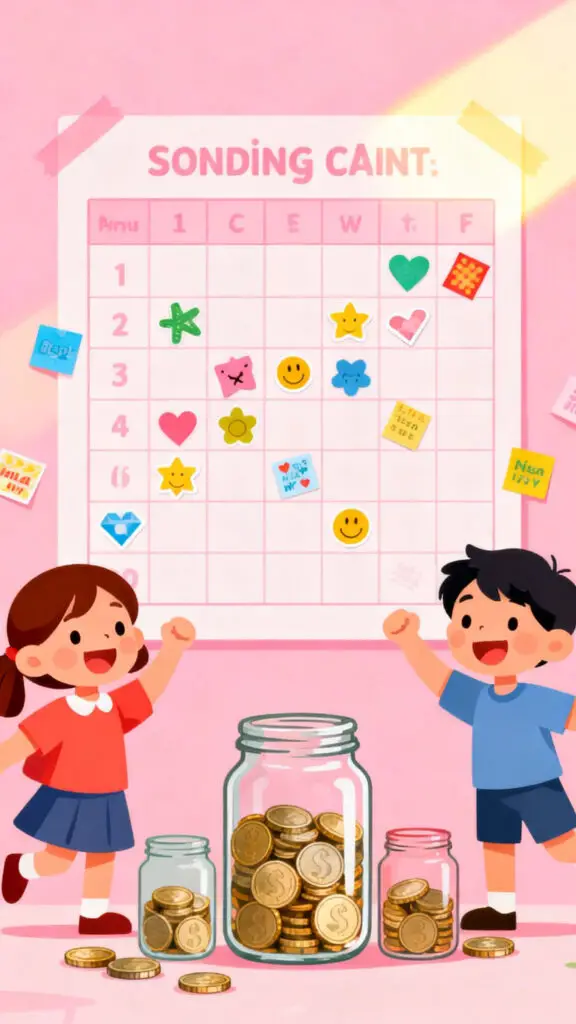
Tracking savings visually is a great way to make saving money exciting and easy for kids, especially because children understand things better when they can see them clearly. Using tools like savings charts, sticker boards, or even clear jars allows kids to watch their money grow over time, which makes the process feel rewarding instead of boring.
Every time they save money, they can color a box, add a sticker, or notice the jar filling up, which gives them a sense of achievement. This visual progress helps children stay motivated and reminds them of their goals when they feel tempted to spend.
Save Gift Money
Gift money that kids receive on birthdays, holidays, or other special occasions often feels exciting, which can make them want to spend it all at once, but this is also a perfect opportunity to teach the value of saving. Parents can encourage children to save at least a portion of their gift money and explain how it can help them reach bigger goals faster.
Saving gift money teaches kids patience and helps them understand that money does not always need to be spent immediately to feel happy. Over time, kids begin to see how saving part of their gift money allows them to plan better and feel more in control of their choices.
Learn Needs vs Wants
Understanding the difference between needs and wants is one of the most important money lessons for kids because it helps them make better choices as they grow. Needs are things that are necessary for daily life, such as food, clothes, and school supplies, while wants are items that are nice to have, like toys, treats, or games.
When kids learn this difference, they become more mindful about where their money goes and feel less pressure to buy everything they like. Parents can explain this concept through simple examples and daily situations, allowing children to think before spending.
Compare Prices Before Buying
Teaching kids to compare prices before buying something helps them understand the value of money and develop smart shopping habits early on. Parents can show children how the same toy, book, or snack may cost different amounts at different stores, allowing them to see how choosing wisely can save money.
This habit teaches kids patience and encourages them to think instead of rushing into purchases. When children learn to compare prices, they begin to understand that saving money does not mean missing out, but making better decisions. Over time, this skill helps kids become more careful with spending and more confident in managing their money.
Use Money Games for Learning
Money games are a fun and effective way to teach kids about saving, spending, and planning without making it feel like a lesson. Board games, pretend shops, or simple money apps allow children to learn financial skills while playing, which keeps them engaged and interested.
Through games, kids learn how choices affect their money and why saving can be helpful. Playing together also gives parents the chance to explain concepts in a relaxed and friendly way. Since kids learn best through experience, money games help them practice decision-making without fear of mistakes.
Celebrate Saving Milestones
Celebrating saving milestones is important because it helps kids feel proud of their efforts and encourages them to continue saving. When children reach a goal or save a certain amount, parents can acknowledge their hard work with praise, small rewards, or special activities.
This positive reinforcement helps kids connect saving with happiness and success instead of stress. Celebrations do not need to be expensive, as simple recognition can make a big difference. Over time, kids learn that patience and consistency lead to positive results, which strengthens their confidence.
Conclusion
Teaching kids money saving habits at an early age helps them develop responsibility, patience, and confidence that stays with them throughout life. When saving is introduced in a simple, fun, and supportive way, children feel encouraged instead of pressured. These methods help kids understand the value of money and how small choices can make a big difference over time. With guidance from parents and consistent practice, kids learn that saving is not about restriction but about planning and control. These lessons prepare them to handle money wisely in the future, allowing them to grow into adults who feel confident, balanced, and thoughtful about their financial decisions.